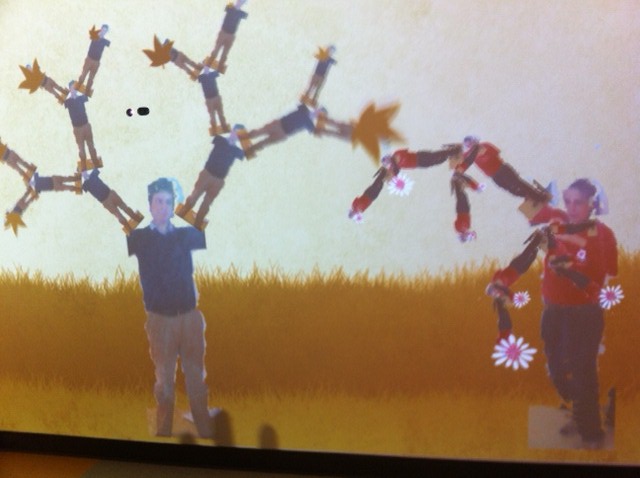
HUMAN TREE

Move your arms and your body around. This exhibit puts a copy of your body on each of your arms. Then on each arm of each body it puts another copy, and so on. The result looks like a tree, in which your body is the trunk, the branches, and the twigs. This shape is called a fractal tree. The exhibit eventually stops copying and puts leaves at the ends, just like a real tree.
As you move around, even though the rule is the same, the tree looks very different. Can you make it tall and skinny? Can you make it bend over and touch the ground?
What shape is a tree? Some trees can be drawn very simply with a triangle or rectangle (the trunk) with a circle on top (the leaves). However, if you look at the branches of a tree, they are not as simple as those shapes. The trunk turns into several smaller branches, which turn into even more smaller branches. The smaller branches can even look like miniature trees themselves, with smaller and smaller twigs coming off of them.
This is known as self-similarity: a piece of the object (the branch) looks like a miniature version of the entire object (the tree). It is one of the important properties of fractals.

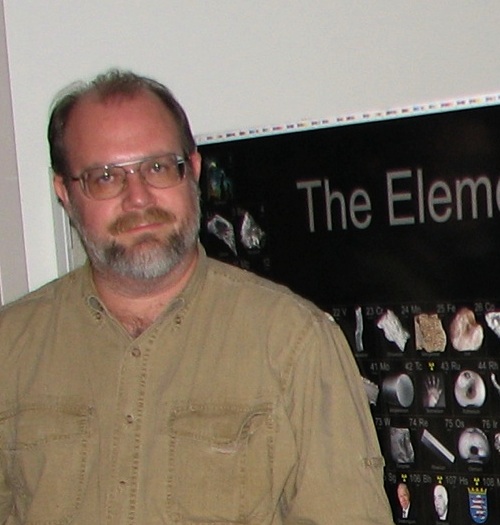
Theodore GrayChemistry and Mathematics
Theodore Gray, a co-founder of Wolfram Research, contributed the initial concept for Human Tree.
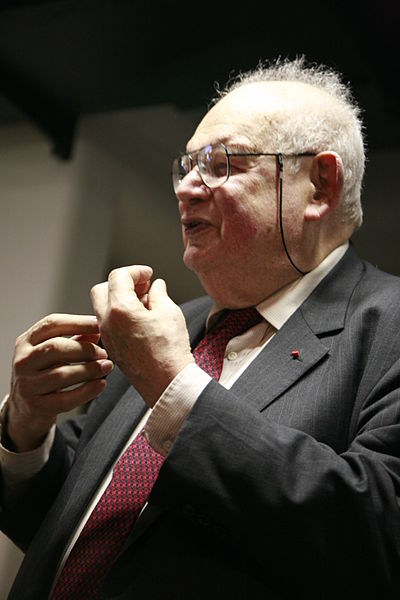
Benoît Mandelbrot1924-2010Mathematics
Using access to IBM’s computers, Mandelbrot was one of the first to use computer graphics to create and display fractal geometric images, leading to his discovering the Mandelbrot set in 1979. He showed how complexity can be created from simple rules, and things considered chaotic or a mess, such as clouds in reality had a ‘degree of order.’
His research contributed to the fields of geology, medicine, cosmology, engineering and the social sciences. Science-fiction writer Arthur C. Clark called the Mandelbrot set ‘one of the most astonishing discoveries in the entire history of mathematics.’”
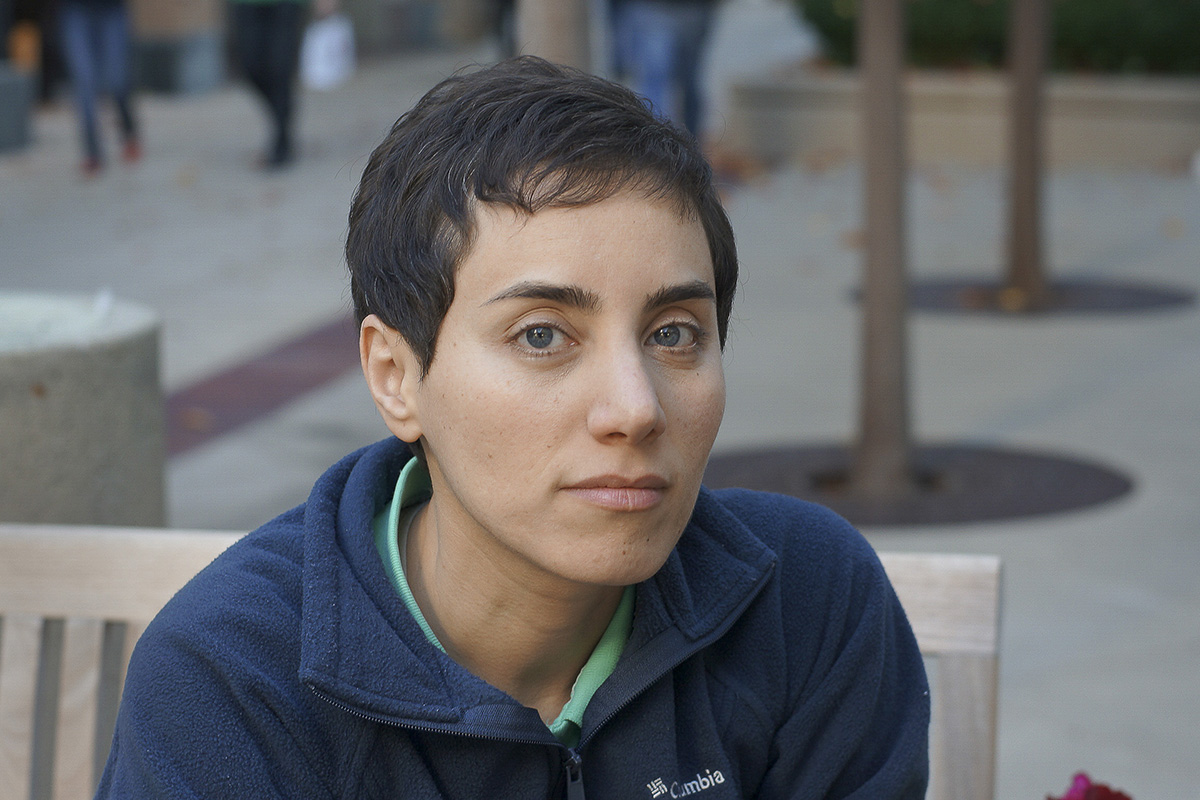
Maryam Mirzakhani1977 – 2017Mathematics
The dynamic fractal tree generated from your body would fit right in with the groundbreaking work in dynamical systems, geometry, and ergodic theory of the late Iranian-born mathematician Maryam Mirzakhani (1977 – 2017), who taught at Princeton and Stanford, and was the first woman to receive a Fields medal before her untimely death at age 40.
Image credit: Courtesy Stanford News Service
Fractal trees are extremely important in many problems of distribution. For example, the blood vessels in your body are more or less a fractal tree. One big tube splits into a number of smaller ones, which themselves split, and so on down to the tiny capillaries. Real trees are somewhat like this kind of structure: the large trunk splits into smaller branches, down to the small twigs.

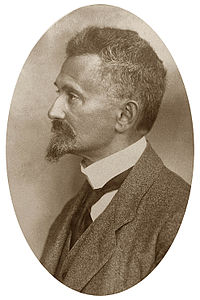
Felix Hausdorff (1868–1942) developed some of the mathematics that underlies the theory of fractal shapes. As a young man he was interested in literature, philosophy, and music more than mathematics. His parents dissuaded him from making a career as a musician, but he continued a side career as a philosopher and writer under the pen name Paul Mongré. His thesis was on astronomy before he turned to mathematics. He made many contributiions in the area of topology and set theory. He introduced what is now called the Hausdorff fractional dimension, a way to describe shapes that lie in between the familiar zero-dimensional point, one-dimensional line, two-dimensional surface, and three-dimensional volume. He died under the Nazi regime.